













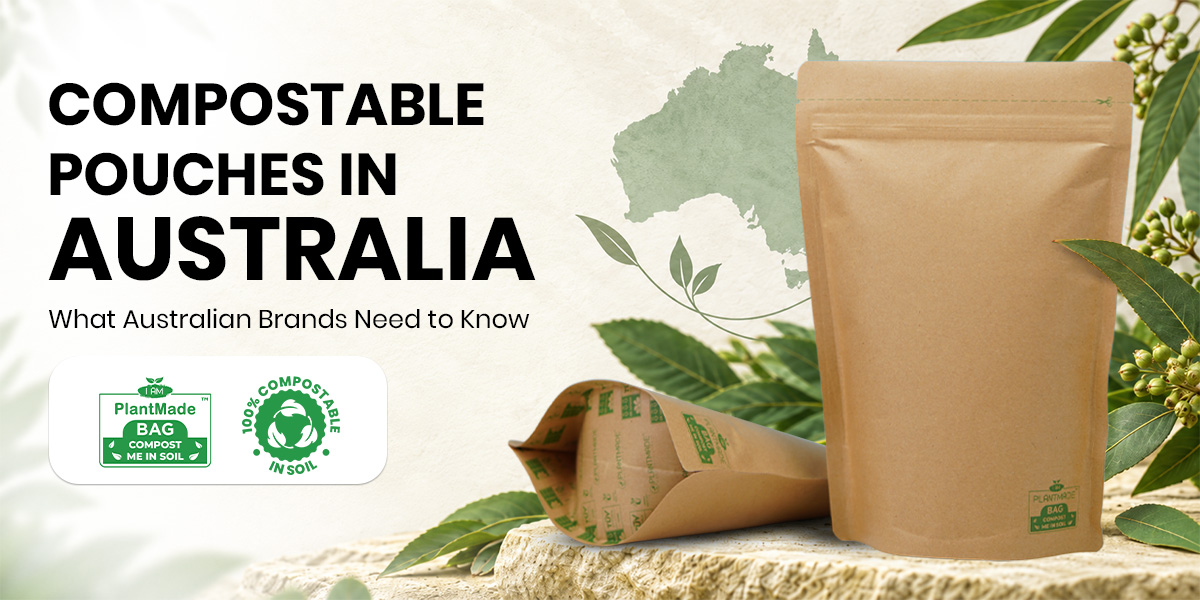
Compostable pouches are gaining attention among Australian brands looking for alternatives to conventional flexible packaging. Plant-based materials can be used in compostable packaging structures, but choosing one involves more than simply selecting a pouch labelled “compostable.”
The material, product requirements, composting conditions and environmental claims all need to be considered together.
What Are Compostable Pouches?
Compostable pouches are flexible packaging structures designed to break down through composting under defined conditions. Some materials used in these structures can come from renewable or plant-based sources.
However, plant-based does not automatically mean compostable. The complete pouch needs to be considered, including its films, sealants, adhesives, inks and other components.
KEY FACT : Australia has recognised standards for compostable plastics, including AS 4736 for plastics suitable for commercial composting and other microbial treatment. Home composting is addressed separately under AS 5810.
Compostable Does Not Mean Home Compostable
One of the most important considerations for Australian brands is understanding where the pouch can actually be composted.
A product designed for commercial or industrial composting should not automatically be promoted as suitable for a home compost bin. The conditions and testing requirements are different.
AUSTRALIA NOTE : The ACCC has specifically highlighted that consumers may misunderstand a general “compostable” claim if the product only works under particular industrial composting conditions. Claims should explain the conditions and disposal steps where necessary.
Where Can Compostable Pouches Be Used?
Compostable pouches can be considered for selected dry foods, snacks, bakery products, seeds and other products where the material can provide the required barrier and shelf-life performance.
They are not automatically suitable for every application. Products containing oil or liquids, or products requiring extended shelf life, may need a different packaging structure.
Moisture resistance, oxygen protection, sealing performance and product compatibility should be assessed before selecting the material.
PACKAGING NOTE : A pouch still has to protect the product during filling, transport and storage. Sustainability should not be considered separately from packaging performance.
Environmental Claims Matter in Australia
Australian businesses need to take particular care with environmental claims. Under the Australian Consumer Law, environmental and sustainability claims must be true, accurate and based on reasonable grounds. The ACCC also warns against broad or vague claims that can give consumers an exaggerated impression of environmental benefits.
So, rather than simply saying “eco-friendly” or “100% compostable,” brands should clearly communicate what has actually been tested or certified and under which conditions.
GOOD TO KNOW : The ACCC has previously taken action over unsupported claims that plastic products were biodegradable or compostable. Evidence should relate to the actual product being sold.
What Should Australian Brands Check?
Before choosing compostable pouches, consider:
- Complete material structure
- Product type and required shelf life
- Moisture, oxygen and oil resistance
- Filling and sealing requirements
- Applicable compostability standard or certification
- Commercial vs home composting conditions
- Evidence supporting environmental claims
The important question is not simply “Is this pouch compostable?” but “Under what conditions is it compostable, and can those conditions realistically be met?”
Compostable Pouches from PouchDirect Australia
PouchDirect provides flexible packaging solutions for Australian businesses exploring different pouch materials and formats.
For a compostable pouch project, sharing the product type, pouch size, required shelf life, filling method and quantity helps determine whether a compostable structure is appropriate.
A well-selected compostable pouch should combine suitable product protection with a clearly defined composting pathway and environmental claims that can be supported with appropriate evidence.