













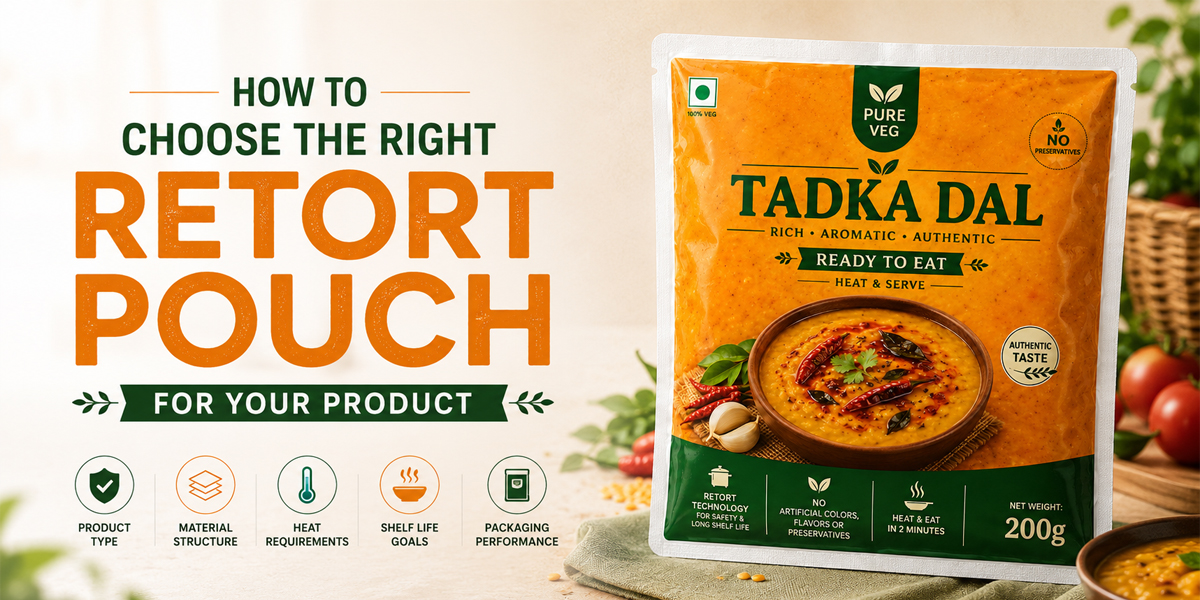
Two retort pouches can look almost identical from the outside, yet perform very differently during sterilisation.
The difference lies in the material structure hidden inside the pouch.
Choosing the right material isn’t simply about making the pouch stronger. It’s about selecting a structure that can protect your product throughout heat processing, transportation, storage, and finally, when it reaches the consumer.
Every product has different packaging requirements
There’s no single laminate that’s suitable for every retort application.
A ready-to-eat curry doesn’t place the same demands on packaging as seafood or pet food. Products with high oil content, acidic ingredients, or longer shelf-life requirements often need different barrier properties.
This is why packaging manufacturers usually begin by understanding the product before recommending a material structure.
Barrier performance matters more than most people realise
The main purpose of a retort pouch isn’t simply to survive high temperatures.
It also needs to protect the product from oxygen, moisture, light, and external contamination long after the sterilisation process is complete.
If the barrier isn’t suitable for the product, food quality may gradually decline even though the pouch itself appears perfectly normal.
Good packaging protects what’s inside, not just what’s outside.
Heat resistance is only one part of the equation
Many people assume that if a material can withstand retort temperatures, it’s automatically the right choice.
In reality, heat resistance is only one consideration.
The material also needs to maintain seal integrity, resist delamination, and remain stable throughout the product’s intended shelf life. These factors become even more important for products that are exported or stored in challenging environments.
Packaging should match your production process
Material selection should always take the manufacturing process into account.
The filling temperature, sterilisation cycle, cooling method, and product consistency all influence how a pouch performs. A structure that works perfectly for one production line may not deliver the same results elsewhere.
Sharing these details with your packaging supplier early helps avoid unnecessary adjustments later.
Related : Explore our Retort Pouches available in a range of custom sizes, barrier structures, and printing options.
Think about tomorrow, not just today's product
Many brands focus only on their current packaging requirements.
But what happens if production increases, exports begin, or shelf-life expectations change?
Selecting a material with future growth in mind can reduce the need for redesigns and qualification testing later. It’s often a smarter long-term investment than choosing packaging based only on today’s cost.
Final Thoughts
The best retort pouch material isn’t the most expensive or the thickest. It’s the one that’s designed around your product, your production process, and your business goals.
Working with an experienced packaging partner helps ensure the laminate structure supports product safety, consistent performance, and long-term reliability rather than simply meeting minimum specifications.
🔗 Suggested Internal Links
References
- Flexible Packaging Association (FPA)
- PMMI – The Association for Packaging and Processing Technologies
- ASTM International – Flexible Packaging Material Standards